There’s something about being in a garden that can make us feel better. The warmth of the sun on our face, the smell of herbs as we brush past them, watching something we planted weeks ago finally flower, or simply sitting outside with a cup of tea and listening to the birds.
These simple pleasures matter at every stage of life, but in later life, having easy access to a garden and opportunities to spend time outdoors can be particularly valuable.
At Kew Care Group, our gardens are much more than somewhere nice to look at. They’re places to spend time, stay active, continue old hobbies, enjoy nature and connect with other people. Gardening also fits naturally with our wider approach to activities, reflecting each person’s interests while offering enjoyment, companionship and a sense of purpose.
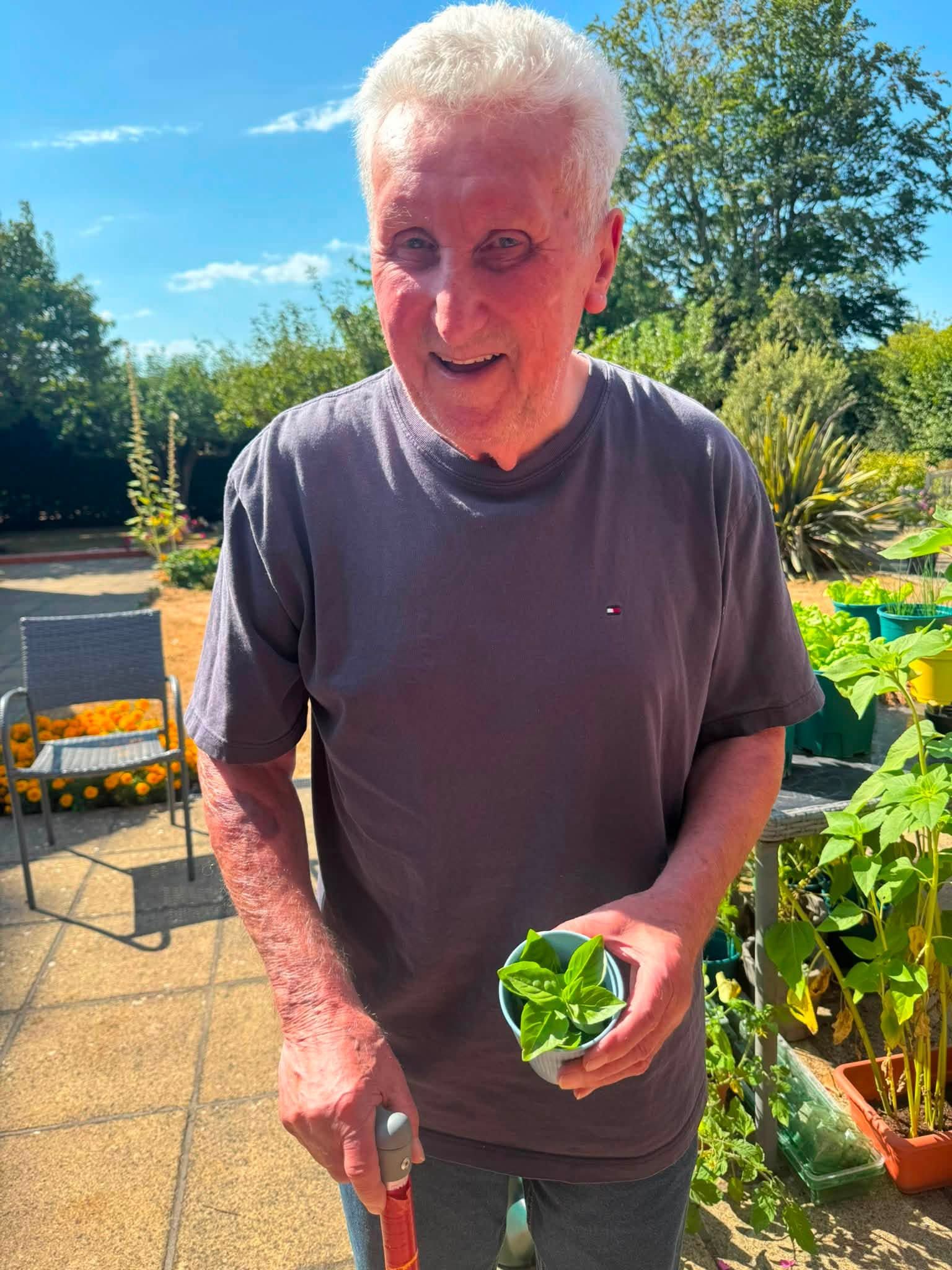
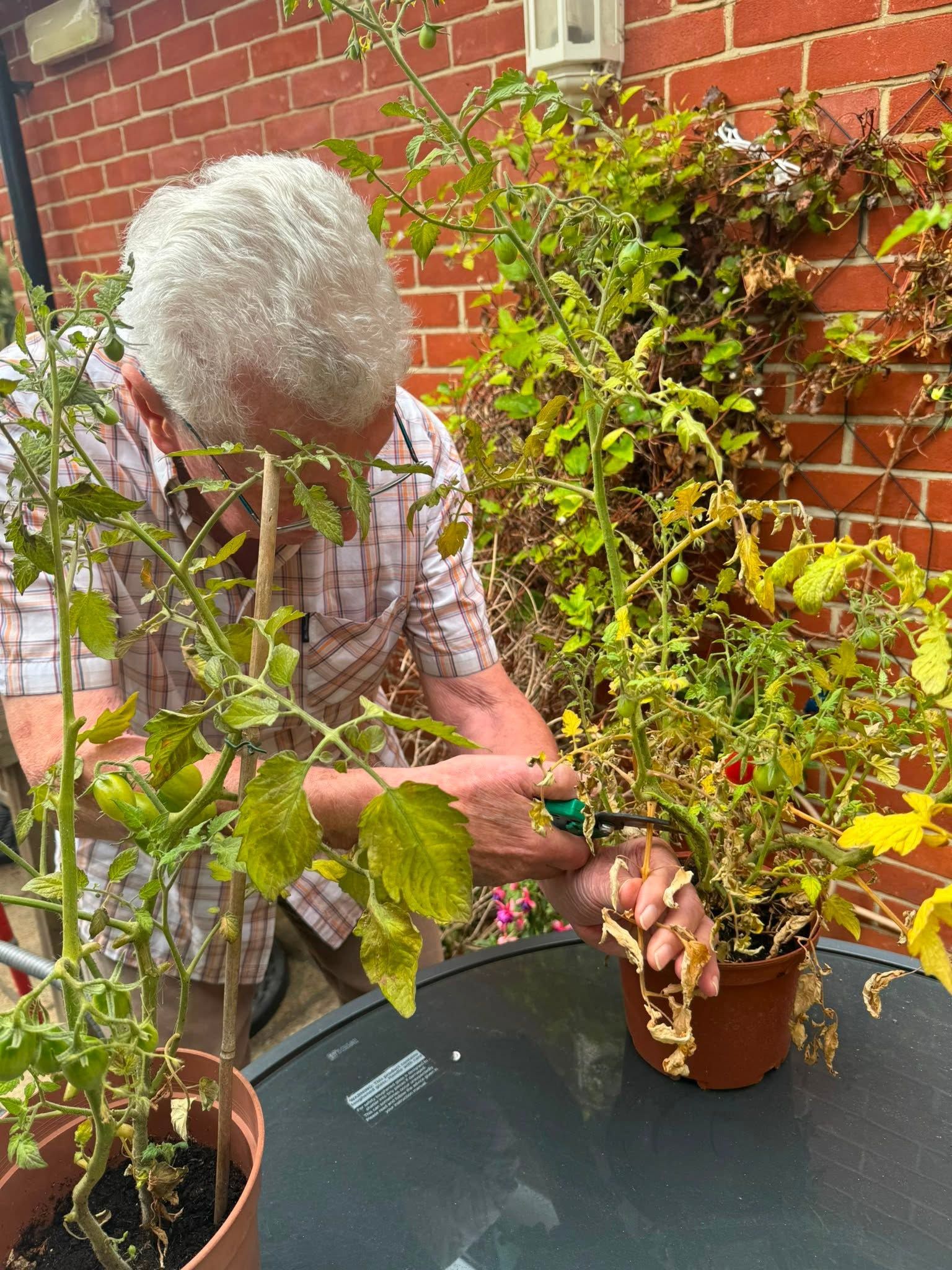
At Green Willow, Louise and Cathy have been developing a gardening club this year, which now has a core group of three regular resident gardeners.
It began in April with crocosmia, followed by sunflowers and tomatoes in May. By June, the seedlings needed potting on and the gardening sessions became more frequent. Since then, the group has also planted basil, chives and lettuce for the kitchen.
Much of the growing is currently being done in pots, which makes daily watering easier. The home’s gardener carries out much of the practical work, including growing salad for the kitchen in the raised bed, while residents remain actively involved in overseeing the garden and directing what is grown.
Over winter, the gardener will work on improving the soil in the raised bed, ready for the group to make even more use of it next spring.
A monthly gardening calendar will also give the group an idea of what’s coming next and provide regular opportunities to get together, tend what they’ve already planted and plan what they’d like to grow next. And that sense of anticipation is part of the pleasure of gardening. You plant something today knowing you’ll be coming back tomorrow, next week and next month to see what happens.
You don’t have to be an experienced gardener to benefit from getting involved. Gardening can involve as much or as little practical work as somebody wants. One person might enjoy planting and watering, while another prefers sitting nearby, chatting and keeping a watchful eye on proceedings.
At Manor Cottage, residents have been getting hands-on with planting and potting, both indoors and outside in the sunshine. Tomatoes and a cucumber plant have been thriving too, with Shannay making sure they receive daily attention and care.
Sometimes the pleasure of growing something is as much about the checking, tending and waiting as it is the eventual harvest. There’s always something to look at, talk about or look forward to. And when you finally get to eat something you’ve grown yourself, even better.
Growing your own produce is something residents across Kew Care Group have enjoyed over the years, with seasonal fruit and vegetables making their way from the garden into our homes’ kitchens.
For residents who have spent much of their lives gardening, growing vegetables or tending an allotment, getting involved in the garden isn’t necessarily about introducing a new ‘activity’. It can simply be about helping somebody carry on doing something they’ve always enjoyed.
That’s an important distinction. For many people, the activities they value most are the ordinary things that have always been part of their lives, whether that’s gardening, cooking, crafts, music or simply spending time outdoors.
And we’ve seen just how much gardening can become part of life at our homes. In 2025, residents at Manor Cottage proudly entered the 80th Frenchay Flower Show, creating a miniature garden, a floral collage and a photographic entry. Their efforts earned them second prize, along with a very well-deserved rosette and certificate.
Gardens are full of familiar sights, smells and sensations. The scent of a tomato plant or freshly cut grass can transport us back to another time. A particular flower might remind somebody of the garden they had when their children were young. Growing vegetables can spark conversations about allotments, family recipes or what they used to grow at home.
This can be particularly valuable for people living with dementia, as familiar sensory experiences can sometimes help prompt memories, feelings and conversations.
At Green Willow, for example, residents can enjoy the home’s pond and water feature, watching the fish and the wildlife that visits. Residents have also previously picked and dried lavender from the garden before using it to make scented lavender bags for their rooms, bringing a little bit of the garden indoors.
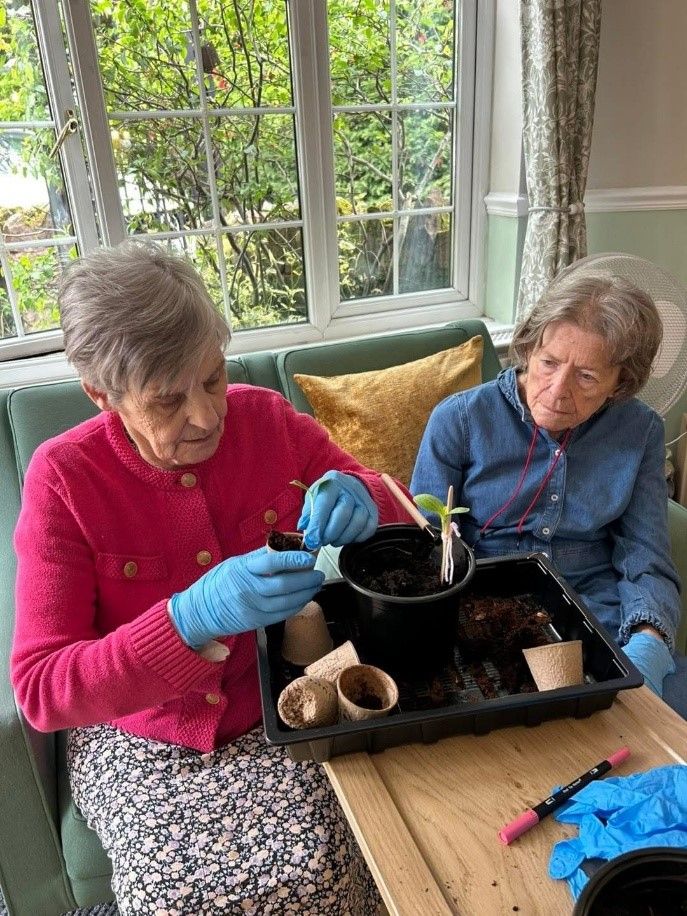
Gardening can also encourage gentle movement without necessarily feeling like exercise. Watering pots, filling containers with compost, planting seedlings, reaching for a tomato or taking a stroll around the garden all involve movement.
Just as importantly, there’s a reason for doing it. You’re not watering a plant because somebody has told you it’s good exercise. You’re watering it because you want to see if that sunflower will grow. That sense of purpose matters. Gardening provides something to tend, watch and return to, while still allowing each resident to take part at their own pace.
And there are plenty of other ways to enjoy our outdoor spaces too. Residents across Kew Care Group have enjoyed birdwatching and wildlife activities, including making bird feeders and bird houses.
Gardens naturally bring people together. They give residents somewhere to chat with friends, spend time with team members and enjoy visits from family.
Gardening itself can become a shared activity, with plenty of opportunities for conversation, swapping tips and the occasional difference of opinion about the best way to grow a tomato! But you don’t have to be gardening to enjoy the benefits of being outside. A chat with a friend, watching the wildlife or simply finding a comfortable spot in the sunshine can be just as valuable.
And when the British weather cooperates, there’s nothing quite like sitting outside together and enjoying it.
One of the lovely things about a garden is that it never stays exactly the same. Spring brings new shoots and blossom, summer brings colour and warmer days outdoors, autumn changes the leaves and brings the harvest, while winter gives us time to think about what we might grow next.
The natural rhythm gives us all a link to nature, and it’s important that our residents don’t miss out on that, even when they are not able to get out and about so easily. We all need that connection to notice, talk about and look forward to throughout the year.
Gardening doesn’t have to stop when summer ends either. During the quieter months, residents can talk about what they used to grow, plan what they’d like to plant in the spring or simply reminisce about gardens they’ve known and loved.
At Green Willow, the plans to improve the raised bed over winter and introduce a monthly gardening calendar mean there will continue to be something for the home’s gardeners to think about and look forward to before the main growing season begins again.
At Kew Care Group, our gardens are there to be enjoyed, whether that means getting stuck into planting, picking something you’ve grown, watching the wildlife, spending time with family or simply finding a sunny spot for a cup of tea.
Because supporting wellbeing in later life doesn’t always require something complicated.
Sometimes it’s planting a seed, watering a tomato, feeling the sun on your face and looking forward to seeing how the garden changes tomorrow.
If you’re looking for a care home where residents are supported to continue the interests and routines they enjoy, we’d be very happy to show you around. To find out more about life at Kew Care Group or to arrange a visit to one of our homes, please get in touch with our team.
RELATED ARTICLES - Care Home Advice
Published on 08 September 2026 By Kara Morally