Choosing a care home is a significant decision, and visiting for the first time can bring a mixture of emotions. Alongside practical questions about care and costs, you'll also be trying to work out whether the home feels welcoming, whether the team genuinely knows its residents and whether it feels like somewhere your loved one could happily call home.
This guide has been created to help you get the most from your visit. It includes practical questions to ask, things to look out for and a free downloadable checklist that you can take with you as you compare different care homes.
Visiting a care home for the first time can feel overwhelming.
You may be trying to understand the care available, meet the team, look around the home and decide whether it feels right for someone you love - all in one visit.
It is completely normal to arrive with a head full of questions, only to forget half of them once the conversation starts.
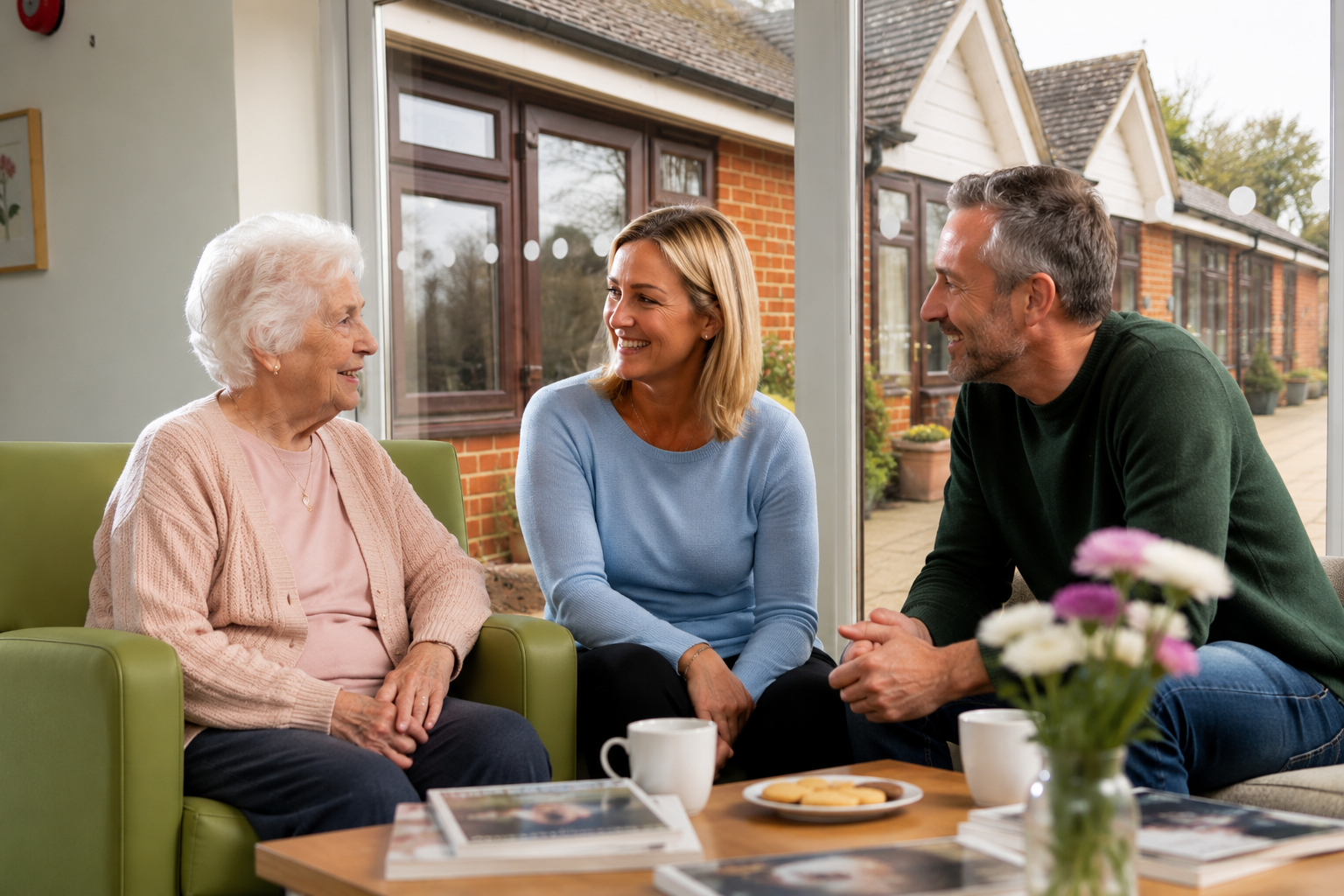
Preparing a few questions beforehand can help. But choosing a care home is not only about the answers you are given. It is also about what you notice while you are there: how residents are spoken to, whether the home feels relaxed and whether people seem genuinely known by the team caring for them.
Here are some of the things to ask - and look out for - during your visit.
Begin by talking openly about the support your loved one needs now and how those needs may change in the future.
Ask how the home assesses each person’s needs, how often care plans are reviewed and whether family members are involved in decisions.
You may also want to ask:
A good assessment should look beyond medical needs. It should help the team understand the person: what matters to them, what makes them comfortable and how they prefer to live their day.
An activities calendar can be useful, but it does not tell you everything about life inside a care home.
Ask how the team finds out what each resident enjoys and whether people are supported to continue with existing hobbies and interests. Find out whether there are opportunities to go out, spend time in the garden or stay connected with the local community.
It is also worth asking what happens when someone does not want to join a group activity. Are quieter activities or one-to-one time available?
While you are looking around, notice what is happening naturally. Are residents chatting with one another? Do staff stop to say hello? Is there laughter? Does the home feel busy in a pleasant way, rather than rushed?
The small, everyday interactions often tell you more than the timetable.
Download your complimentary checklist here
Moving into a care home should not mean giving up control over everyday decisions.
Ask whether residents can choose when they get up, where they eat, how they spend their time and whether they join an activity.
Find out how flexible the home’s routines are. For example, what happens if someone prefers a late breakfast, likes to stay up in the evening or wants to eat somewhere quieter?
The best care works around the individual wherever possible, rather than expecting everyone to follow exactly the same routine.
Ask to see the type of bedroom that may be available and find out what is included.
Can residents bring their own furniture, pictures, bedding and treasured belongings? Are the rooms en suite? Is there enough space for visitors to sit comfortably? Can couples live together?
Try to picture your loved one in the room. Could it be made to feel familiar and comfortable? Would there be space for the photographs, ornaments and belongings that help it feel like their own?
Mealtimes are an important part of daily life. They should provide good nutrition, but they should also be enjoyable.
Ask to see a sample menu and find out how the home caters for dietary needs, cultural preferences, smaller appetites and favourite foods.
Useful questions include:
Notice what the dining areas feel like too. Are they relaxed and welcoming? Are people given enough time to eat without feeling hurried?
The people working in a care home shape much of the experience for residents and their families.
Ask how staff are trained, how new team members are introduced and whether your loved one will have a named carer or key worker.
You can also ask how the home manages staffing during the day and overnight, and how changes in a resident’s health or behaviour are shared with the wider team.
During your visit, pay attention to how staff speak to residents. Do they use their names? Do they listen properly? Do they knock before entering bedrooms? Do they seem patient, warm and comfortable in each other’s company?
Kindness is often visible in the details.
Good communication can make a huge difference to how reassured families feel.
Ask who your main point of contact will be and how often you can expect updates. Find out whether family members are invited to care reviews and how the team communicates changes in health, medication or wellbeing.
It is also important to know who to speak to if you have a concern and how complaints are handled.
You should feel able to ask questions, including the small ones that may be playing on your mind.
Staying connected with family and friends matters.
Ask whether there are fixed visiting hours or whether relatives can visit more flexibly. Find out whether children and pets are welcome and whether there are private areas where families can spend time together.
You may also want to ask whether residents can leave the home for family occasions, trips or an afternoon out, and whether relatives are invited to events and celebrations.
A good home should help relationships continue, not place unnecessary barriers around them.
Care home fees can feel complicated, so ask the Home Manager for a clear written breakdown of what is and is not included.
Do not be embarrassed to ask detailed questions. Families need to understand the financial commitment before making a decision.Questions to ask the home manager may include:
Questions to ask the home manager may include:
Ask who you can contact if you have further questions after the visit. It is often easier to think clearly once you have had time to read everything at home.
Before offering a place, the home should carry out an assessment to make sure it can meet the person’s needs safely and comfortably.
Ask who will complete the assessment and where it can take place. In some circumstances, it may be possible for a member of the team to visit the person at home or in hospital.
You can also ask how the home helps new residents settle in. Can they visit again before moving? Can family members help arrange the bedroom? Is respite care available for someone who would benefit from a shorter stay first?
Where circumstances allow, the move should be planned with the person, rather than simply happening to them.
This may be the most important question of all.
Does the home feel welcoming when you arrive? Are you greeted warmly? Do residents appear comfortable? Are staff approachable? Does the home feel clean and well cared for without feeling clinical?
Look beyond the décor. A beautifully decorated home may still feel impersonal, while a slightly less polished one may be filled with warmth, humour and genuine affection.
There is no single perfect care home for everyone. The right home is one that can meet your loved one’s needs while helping them feel safe, respected and understood.
Choosing a care home is a big decision, and you should never feel pressured to make it immediately.
Visit more than once if you need to. Take another family member or friend with you. Write down your questions beforehand and make notes during or after the visit.
At Kew Care Group, we understand that families often need time, honest information and plenty of reassurance before deciding what happens next.
Our teams are always happy to answer questions, show you around and talk through the support your loved one may need.
Sometimes the best place to begin is simply with a conversation and a cup of tea.
RELATED ARTICLES - Care Home Advice
Published on 05 August 2026 By Rebecca Williams